

Note: This article introduces Japanese-language books on cross-border e-commerce. These books are written in Japanese and may not be available outside Japan.
When thinking about taking on cross-border EC, many people aren't sure where to even start learning.
Unlike domestic EC, cross-border EC brings a sudden increase in factors to consider — language, payments, logistics, tax systems, marketing methods, and more. Rather than chasing fragmented pieces of information, it's more efficient to first build a systematic understanding of the big picture through books grounded in practical experience.
This article introduces books that are useful for learning about cross-border EC, organized by purpose and level.
* This article uses affiliate advertising.
Why Books Are Effective for Learning Cross-Border EC
Cross-border EC is a field where trends change quickly, but there's still plenty of value in learning from books.
Books aren't newsy by nature. They're not well suited to keeping up with the latest algorithms or recent spec changes. However, in cross-border EC, the underlying commercial flow, legal regulations, and consumer behavior differ greatly from domestic EC.
For example, the following kinds of information are hard to grasp from fragmented sources and need to be learned systematically:
- Differences in consumer behavior by country
- The structure of overseas payment infrastructure
- The basics of tariffs and invoicing
- How to think about multilingual and multi-currency support
- The fundamentals of overseas SEO
Books are well suited to solidifying this kind of foundational understanding all at once.
Points to Check When Choosing a Book on Cross-Border EC
The number of books related to cross-border EC keeps growing every year, but when choosing one, check the following points.
1. Check How Current the Information Is
Cross-border EC is a field where things like payments, tax systems, and logistics infrastructure change quickly. Check the publication year and whether it's been revised, and keep in mind that you should use it primarily as a foundation for understanding strategy.
2. Does It Take a Marketing Perspective?
If you need to build your own traffic-generation strategy in-house, books that go beyond explaining export procedures — and also cover local traffic generation, overseas SEO, social media use, and advertising operations, with real operational examples and concrete tactics — tend to be easier to apply in practice.
3. Does It Match Your Own Phase?
- Beginners who are just starting out
- Businesses already running domestic EC
- Companies looking to seriously pursue overseas expansion
The best book for you depends on your phase.
4 Recommended Books on Cross-Border EC (by Phase and Genre)
Here, we introduce recommended books on cross-border EC suited to different phases and genres.
For Those Who Want to Learn Practical Cross-Border EC Strategy
The Complete Guide to Cross-Border E-commerce & Overseas Web Marketing Tactics (越境EC&海外Webマーケティング“打ち手”大全)
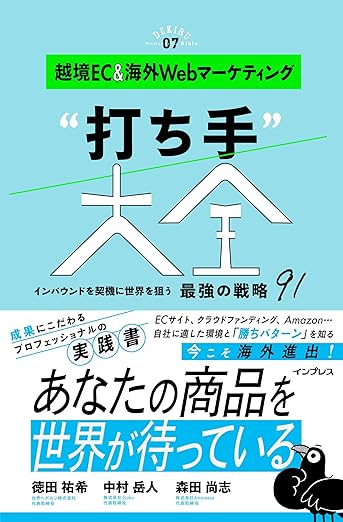
This book organizes cross-border EC practice down to the level of concrete tactics.
It covers market selection, multilingual support, overseas SEO, social media use, influencer tactics, advertising operations, and logistics design — comprehensively bringing together the elements that make up cross-border EC. Rather than pure theory, it's built around a practical perspective of "what to do and how to do it."
The book is written by authors with hands-on cross-border EC experience, so its content reflects real-world practice. Because of this, it's structured to help readers understand not just the tactics themselves, but the reasoning and decision-making behind them.
On the other hand, some readers say it's information-dense and somewhat challenging for beginners. It's best suited to businesses already running domestic EC, or those seriously considering cross-border EC.
For Beginners Who Want to Start Cross-Border EC
Your First Cross-Border E-commerce & Overseas Web Marketing (はじめての越境EC・海外Webマーケティング)

This is an introductory book that explains the basic structure of cross-border EC step by step.
It builds up in stages, from a definition of what cross-border EC even is, to how to think about market selection, the flow leading up to a sale, and the preparations required. Technical terms are explained carefully too, making it easy for readers with no domestic EC experience to follow along.
The book is written by an author with expertise in overseas marketing and cross-border support, and it emphasizes building a foundational understanding before diving into practice. The focus is less on the fine details of tactics and more on grasping the overall picture first.
On the other hand, it may feel a bit light for those looking for concrete operational know-how or advanced marketing strategy. It's a good fit for beginners just starting to consider cross-border EC, or small businesses at the introductory stage.
For Those Who Want to Understand the Legal and Risk Side of Cross-Border EC
Understand It in 60 Minutes! A Super-Beginner's Guide to Law for E-commerce Businesses (60分でわかる!ECビジネスのための法律 超入門)

This introductory book compactly organizes the legal basics needed to run an EC business.
It pulls together key legal points that EC businesses need to keep in mind — Japan's Act on Specified Commercial Transactions, personal information protection, disclosure obligations, return policies, and more.
The book is written by an author with specialized legal expertise, and it organizes practical points to watch out for without getting overly technical. It's structured so you can grasp the overall picture of legal risk in a short amount of time.
On the other hand, rather than a detailed treatment specific to cross-border EC, the content covers the legal basics of EC in general. It's a useful book for checking risks before you start, or reviewing your operational setup.
For Those Who Want to Export via a Specific Platform
Cross-Border E-commerce Blue Ocean: The Complete Guide to Exporting via JOOM (越境ECブルーオーシャン JOOM輸出完全ガイド)

This is a practical guide focused on exporting through a specific overseas marketplace called "JOOM."
It walks through concrete steps, from setting up an account, to listing procedures, product selection, pricing design, and operational tips. Rather than covering cross-border EC strategy as a whole, its content is aimed at understanding how to execute on this specific platform.
The book is built around the author's own experience actually exporting through the marketplace, giving it a practical, hands-on perspective. As a result, much of the content is something you can try right away.
On the other hand, this isn't a book for learning overall cross-border EC market strategy or how to build a multilingual, self-hosted EC store. It's a good fit for those who want to first try cross-border sales through a marketplace, or who want to target a specific market.
Ways to Learn About Cross-Border EC Beyond Books
Once you've built a foundation with books, it's important to supplement it with the latest information online.
The following are effective sources of information:
- Announcements from government agencies and chambers of commerce in each country
- Cross-border EC reports from Japan's Ministry of Economy, Trade and Industry and JETRO
- Shopify's official help resources and overseas marketing blogs
- Social media posts and webinars from practitioners
- Official information from overseas advertising platforms
Get the Big Picture of Cross-Border EC From Books
The number of books related to cross-border EC is growing, but the right one for you depends on your purpose and phase.
- If you want to understand the big picture, choose an introductory book
- If you want to learn practical tactics, choose a strategy book
- If you want to understand risk, choose a legal book
It's important to build your foundation with books while supplementing the latest information with official documentation and local sources. Since cross-border EC requires preparing for a great many things, the quality of your upfront learning strongly shapes your results. Choose the book that fits your purpose, and deepen your understanding step by step.


